Showing posts with label Dietetic Internship. Show all posts

Graduation and Beyond!

May 22nd marked the Tufts graduation ceremony.  I salute my colleagues at the Tufts Friedman School of Nutrition Science and Policy (holla for my Nut Comm class!), and I have a special tribute to the Tufts dietetic interns.   
Tufts Dietetic Interns, Class of 2011
Ladies, working with you these past two years has been an honor.  
Registered Dietitian and MS...We did it! 
DI Orientation, August 2009
Alanna.  All elegance and poise.  Your fortitude and strength has inspired me.  I appreciate your dedication to do all things well.
Adrienne.  My sunshine friend!  Always ready to greet with a smile, and help me put things into perspective.  You think beyond dietetics, and I like this.  Let's meet in Austin!  
Nathalia.  Natural leader, fantastic MSDA president, and ever ready to provide comic relief.  "We R Who We R"-Whenever I hear this, I'll bust a move for our song.  Go Nat Attack!
Lauren.  My very first Boston acquaintance; thank you for subletting your Brookline room, and welcoming me to the city!  Good luck in St. Louis!
Inpatient rotations, August 2010
Renee.  Hey DJ, your enthusiasm is contagious!  You converted me to PBB sandwiches, and when I'm feeling down I'll remember to recite, "One day at a time, one patient at a time, for the win."  Thank you!  Sauce on.
Vicky.  My fabulous rotation partner, and "twin"!  Ah, such memories together: Korean bbq at Koreana, red bean buns from Chinatown, instant coffee in dialysis clinic, Whole Foods lunches at MGH.  Thankful for you.  Rooting for you in California!
Erin.  Succinct, sassy, and never too flustered.  Love it.  Long live your grape salad and chocolate chip cookies!
Nikita.  This classy gal is truly the Queen of Spice (please open an Indian restaurant someday!).  Roomie, you are a kindred spirit.  I miss you already.
What's Next?  Belgium!
Yup, I'll be heading to Brussels from June through August for a summer internship at the European Union Food Information Council (EUFIC).  EUFIC is a non-profit organization that provides nutrition and food safety information to media, industry, educators, and health professionals.  This is my first taste of Europe!  I'm eager to continue this unique opportunity, which was trail-blazed last summer by fellow Tufts colleague Kelly Dumke.

In September I'll return to Boston for one last semester of grad school.  Turns out I'm not officially graduated yet. *wink*  But wanted to walk with my class nonetheless!

Stay tuned this summer for updates and pictures.
Cheers!
Rachel

5 Week Countdown

Only five more weeks until completion of the dietetic internship!  This week I'm back at the hospital to start rotation in the Neonatal Intensive Care Unit; I'm very excited to see the little ones.  Coming next is bariatrics at Massachusetts General Hospital.   As classes finish and rotations draw to an end, I try to disentangle from the flurry of work and appreciate the mentors, professors, colleagues, and friends who have made the Tufts Dietetic Internship such a fabulous experience thus far.

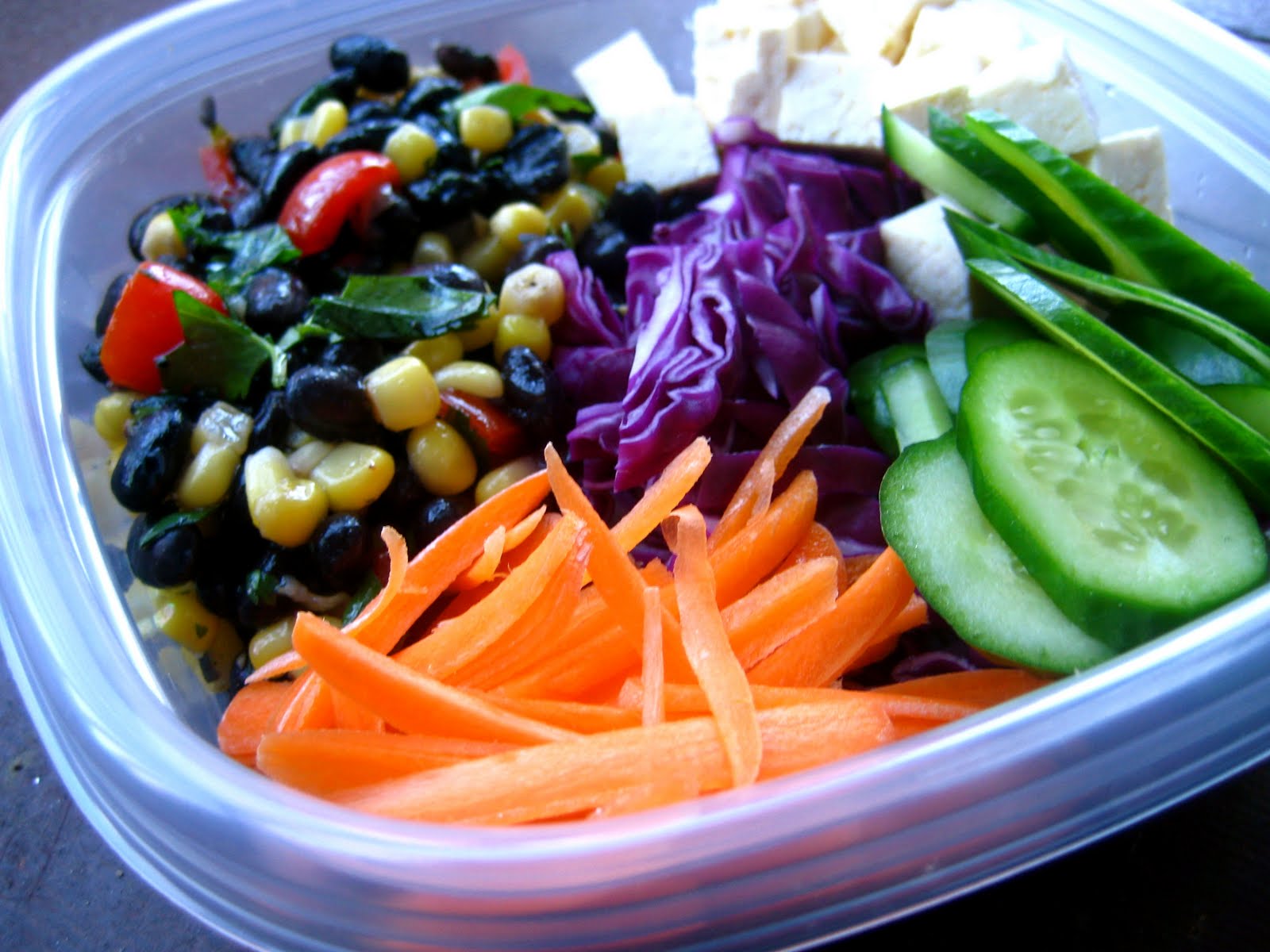
Pictured above: Winter has finally switched to spring, so I'm changing up my lunchtime routine to fresh salad.
What are you packing for lunch these days?
Best of luck to Molly, Melissa, and all my other friends who are running the Boston Marathon tomorrow!

love,
Rach

Lesson 8: Iron Out the Wrinkles

"Oh dear," I thought, as I tugged my white lab coat from the laundry.  "It's been quite some time since my last hospital rotations.  My coat is wrinkled, my notes are crumpled, and my clinical common sense is no where to be found."  After four months away from the hospital, January marks my return to the pediatric floors.  With mixed trepidation and excitement, I washed my white coat and smoothed out the creases.  Time to re-entered the world of TPN recs and tube feed calculations.

After two weeks I'm grateful to report that I'm loving the peds floors.  Hats off to a fabulous preceptor, a gracious medical team, and the endearing kiddos!  However I'm still having trouble ironing out the wrinkles of my memory.  It's alarming how quickly I've forgotten the minutia of medications and formulas.  But I take heart.  I remind myself that this journey ends at competency, not perfection.
Boston State House on the Commons
Clinical Nutrition Resources for Pediatrics
These resources have proved useful thus far.
I would love to hear your opinions and exchange resources please!
  • Pediatric Nutrition Reference Guide, 9th Edition, Texas Children's Hospital
  • ADA Pediatric Manuel of Clinical Dietetics
  • Nestle Nutrition, Pediatric Nutrition Helpful Hints (fold-out)
With yet another snow storm this weekend and temps below zero, Boston's forecast looks grim.  This month my Sorel snow boots have quickly become my most valuable investment!

Any nutrition and pediatrics references to recommend?
Are you staying toasty and dry this weekend?
Cheers,
Rachel

Top 10 Clinical Nutrition Resources

This summer I finished adult hospital rotations, yipee!  In addition to developing a graham cracker addiction (the food of choice stashed at every nurses' station), I also discovered a growing curiosity for the medical principles that accompany nutrition recommendations.  Here's some handy references that I want to share.
(A few dietetic interns.  Shout out for the summer crew!)
My 10 Favorite Resources for Hospital Rotations:
When I wasn't google-ing definitions and abbreviations, these books and websites were my go-to references.
  1. Nutrition and Diagnosis Related Care by Sylvia Escott Stump (2008).  Easy to use textbook with nutrition guidelines organized by medical diagnosis.  
  2. Dynamed.  Website that provides the medical information organized by disease state.  Includes causes, risk factors, symptoms, diagnosis, prognosis, treatment, and evidence-based recommendations with direct links to cited studies.  AWESOME! (By subscription only-hopefully most hospitals have this.)
  3. The ICU Book by Marino.  This book provides useful medical background for the intensive care units (issues like shock, acid-base balance, respiration and ventilation).  Great layer of medical understanding to top off a nutrition foundation.  
  4. Atlas of Human Anatomy by Frank H. Netter.  (Also known as "Netters" by the medical students.)  Standard anatomy textbook with great illustrations.  Makes up for that cadaver's class I never took in college, hehe.
  5. ADA Nutrition Care Manual.   Are you scrambling for a quick patient-education handout?  The Amercian Dietetic Association has standardized handouts and menus, ready to print.  (Subscription only.)
  6. Medcalc- Smartphone application with medical calculations (BMI, Harris-Benedict).  Life just got easier.
  7. The ASPEN Nutrition Support Core Curriculem.  Book by the American Society for Parenteral and Enteral Nutrition (ASPEN); authoritative reference for tube feed and TPN.
  8. Food Medication Interactions by Pronsky.  Easy to use flip book with medications and their nutrient interactions.  Pretty sure this is a standard reference.
  9. Pubmed.  Step into the world of research by searching this free digital archive of biomedical and life science journal articles, organized by the U.S. National Institute of Health and run by the National Library of Medicine.  (Supposedly there's a "Pubmed Health" encyclopedia, but I can never find the link!)  
  10. Krause's Food and Nutrition Therapy (2007) and Nutrition Therapy and Pathophysiology (2010) by Nelms.  Here's one college textbook I don't regret buying!  Nothing beats these fundamental Medical Nutrition Therapy books.   
*TIP: If affiliated with a teaching hospital, try treasure hunting in the medical school library!
It will be fun to look back on these references in a year...
What do you think?
What are your favorite nutrition and medical resources?   
Got to keep this list going!
Cheers,
Rachel

Lesson 7: Bumping the Walls. Questions from the ICU.

Charles River, Boston Massachusetts
Yesterday, in an attempt to escape the world of scrubs and sanitizer, I laced up my running shoes and walked home from the hospital.  90 minutes later I arrived at my doorstep with sagging shoulders (I think my bag gained 10 pounds along the journey), and brimming over with fresh musings about the dietetic internship.  I'm currently working with the dietitian on the Surgical Intenstive Care Unit (SICU) and Medical Intensive Care Unit (MICU).  Here's some thoughts.
Longfellow Bridge, looking into downtown Boston
What's to like about the Intensive Care Units (my opinion!):
  • Morning rounds.  I enjoy listening to the MDs and residents talk their stuff, and it's much easier to stay updated on my patients.  I like to measure my learning progress by counting the number of terms and abbreviations I don't understand.  Each day the long list is shrinking!
  • Complex medical conditions.  Our body is smart, but so much can go wrong.  Amazing pathophysiology.  I want to know more.
  • Calculating tube feeds and IV nutrition (TPN).  This is why the doctor needs a dietitian!

Intensive Care Units, Dislikes (my opinion!):

  • Minimal patient interaction.  Once a patient is sedated and on a breathing machine, be prepared for  a one-way conversation.  *wink*  But honestly, I do not like spending the entire day talking only with the medical team and family.  Talking with a patient makes me feel like I am helping them.
  • The limited scope of nutrition in critically ill patients.  I feel silly worrying about a patient's eating when the rest of the team is working hard to keep their heart pumping, their lungs breathing, and their blood vessels open.  It's frustrating, but I understand.
Here's where nutrition leaves me hungry.  In these critically ill patients, I want to dig deeper into the medical state, I want to understand the disease process, I want to directly affect the medical plan.  As a dietitian-in-training, I wish that the field of nutrition could be more involved, more helpful.  Is Dietetics in a glass house, and do I keep bumping the walls?
Questions that I'm trying to figure out:
How does a dietitian justify his/her usefulness in the ICU, without overstepping his/her scope of practice?  Do you know what I mean?
How does a dietitian assimilate to the medical plan, while also gracefully asserting his/her nutrition recommendations?  Hopefully this comes with experience.

Welcome to new readers!  I'm very pleased to make your acquaintance.
Cheers for Thursday,
Rachel

Lesson 6: Changing Hats

flickr photo from splinkyhoo
The dietetic internship goes on: first week on the Intensive Care Units (ICU) is over!  Learning-induced headache?  Yes.  Excited to work this weekend?  No.  Thankful for the amazing ICU staff?  Yes.  These nurses and docs are the best!
The ICU houses the very sickest patients in the hospital-those most likely to need breathing support, fluid stability, and pain control.  From a nutrition standpoint, many of these patients need feedings through tubes and IV catheters.  Calculating IV nutrition is a new role, and a new hat that I'm adding to my closet.
(Photos from a NYC trip last month.  Pardon my randomness.)
People often ask me, "What is a dietitian?  What are you learning in the hospital?"  Earlier I wrote about a dietitian's contribution within the larger medical team.  As a member of this team, a dietitian must don different hats depending on the situation.
Examples From the Hat Rack:
  • Educator:  (A unique role that doctors do not have time to do!)  In a few brief minutes, dietitians provide knowledge and application on a variety of topics spanning carbohydrate foods for a newly diagnosed diabetic, to food safety instructions post kidney transplantation.  No poking, no prodding, just talking.  And I love the talking!
  • Cheerleader: After 10 days of nausea and vomiting, a patient wakes up with an appetite.  What to do?  A dietitian pulls out her pom poms to cheer her on, shouting out tips and encouragement to optimize eating and nutrition.    
  • Nutrition Support: Sometimes a patient needs IV nutrition or tube feeding because they cannot eat.  That's when a dietitian whips out their calculator to calculate and concoct a feeding formula to meet a patient's individual protein, calorie, and fat needs.  I like doing this work.
  • Consultant: A man with cerebral palsy is admitted with breathing problems and a mysterious 40 pound weight gain in recent months.  While the doctors tend to his respiratory needs, a dietitian is consulted to assess the weight situation.  What are the specific energy and protein needs for a man with cerebral palsy (they are actually decreased due to less muscle mass and activity)?  How much weight, if any, should this patient lose?  Dietitians use their expertise to investigate and provide recommendations for the medical team.
Note: This is based on my opinions and experiences thus far at Tufts Medical Center.  Outside of the hospital, dietitians enjoy a variety of roles in diverse settings which may include outpatient clinics, private practice consulting, sports nutrition, research, public health, culinary arts, corporate wellness, and food industry.
Have a fabulous Friday.
Rach
ps- Thanks for bearing with my journal entries and absurd titles.  I love sharing my thoughts, and I also want to promote the field of clinical dietetics!

Lesson 5: Teaching Hospitals-Team Kaleidoscope

flickr photo from dalefarwalker
In the hospital, I'm learning that nutrition is merely one contributing color in a constantly rotating kaleidoscope of patient care.  A dietitian's unique expertise is but one viewpoint tossed amongst the various shapes and perspectives of the other doctors, medical students, nurses, technicians, physicians assistants, social workers, case managers, unit coordinators, physical therapists (who did I miss?).  This multidisciplinary team is really quite beautiful, yet it demands quick flexibility and clear communication.  A single event-one abnormal X-ray finding, a new IV infection, a hold-up in insurance approval-is enough to rotate the scope and send us all topsy-turvy as we shuffle into new positions. 

Despite the inefficiencies, I love the teaching hospital setting.  Although I still struggle to confidently communicate my nutrition recommendations to the residents.  I think the trick is learning how to frame my recommendations within the context of the larger medical plan.  I see myself as one bead (preferably canary yellow!) in this pattern of color, and it is my job to quickly fall into place with each changing scape.
What are your thoughts about teaching hospitals?  Do you mind the inefficiency?


Boston Harbor.  It's been a beautiful summer.
What did you do this weekend?
I went to Ikea for the first time in over a year!  Way too much stimulation for this little heart of mine...afterwards I felt short of breath and pleasantly giddy.

Cheers for Monday!
Rachel

Hospital Rotations Lesson 4: Destination Competency

flickr photo from Digital Explorer
At 70 mph, the hospital rotations are flying by.  8 weeks ago I was standing in the parkling lot, my head filled with nutrition theories, my arms loaded with textbooks.  But then I stepped from the parking lot onto the hospital floors, and that's when the journey began.
On this road trip I picture myself in a red '94 Jeep Wrangler (oh how I miss this car), driving through the practical lessons of nutrition care in a hospital setting.  With 4 weeks left, I'm keeping my eyes on the final destination.  Destination Competency.

Two thoughts.  (Thankfully a blog is both a journal and an information space!)
1. Embrace the U-Turns
Four weeks ago I got pulled to the side of the road and gently informed that my performance on the hospital floors needed to improve.  In particular, I was mistakenly pushing myself to see more patients per day, but failing to properly tailor my nutrition notes for each individual's specific care.  Increased quantity, with decreased quality.  Yup, time for a U-turn.
I didn't cry in that meeting (although later I smeared a patient's medical chart with a few watery sniffles).  In reality, anyone can take a wrong turn, but we are thankful for the roadsigns that guide us.  A change of direction can be a blessing.
2. Drive Solo 
Sometimes I get distracted by the other cars on the road.  I compare myself to other grad students, med students, dietetic interns, and friends.  Although I love my trusty Jeep, it has a broken tapedeck and no air-conditioning; I get easily discouraged when flashy BMWs and cute mini-Coopers whiz by in the left lane.  "How come I'm such a slower learner?"  "I wish I was a witty communicator so that patiens would like me."   Hush hush.  This is when I repeat to myself:  "Girl, just learn what you are supposed to learn.  Be earnest, be wholehearted.  Be thankful for the opportunities God has given you.  Accept criticism, embrace the U-turns.  Keep your eyes on the destination, and chug ahead."
With this attitude, I'm free to take off the hard top (convertible!), turn up the music, and enjoy the ride.

Update: 4 weeks left of adult inpatient!  This week I'm finishing the General Medicine and Oncology/Hematology/Bone Marrow Transplant floors.  I absolutely loved these floors and will be sad to leave them.
New Read
Better: A Surgeon's Notes on Performance
by Atul Gawande (author of Complications and The Checklist Manifesto)
published 2007
Insightful and amusing.  I'm enjoying a new understanding of insurance battles, a new appreciation of hand sanitizer pumps, and a new view of patients as human beings rather than a mere diagnosis.  
Check out Gawande's latest article in The New Yorker about the use of modern medicine in terminal illness.  This sobering article gives me new zeal as a future clinician!
Thanks for listening.
Happy Thursday,
Rach

Hospital Rotations Lesson 3: A Poker Face

Lesson 1: Alphabet Soup
Lesson 2: The Humility Pill
...
Lesson 3: A Poker Face
I think I could use some tips from Lady Gaga.  Here's the story.
Last week I saw a patient with both liver and kidney failure; he had been in the hospital for over a month before transferring to my floor.  I knew something was terribly wrong when I stepped into his room and noticed an eerie yellow glow.  I soon realized it was the sheen of his severely jaundiced skin reflecting off the white bedsheets and absorbing into the white painted walls.  Blinding.  (Jaundice, a symptom of excess bilirubin, gives body tissues a yellow tint and usually indicates liver disease.) Suddenly the man looked up at me, and his voiceless mouth started to speak (he couldn't talk because of a tracheotomy).  I'll never forget his eyes.  I saw no white, only two black pupils on balls of blood red, unblinking saucers of pain boring into my own paralyzed profile.  I attempted my best poker face, however I couldn't maintain eye contact, and I pretended to fiddle with his IV before stumbling out of the room, deeply shaken.  Those red eyes have been on my mind ever since.

What is your strategy for death?  What do you say when it looks you in the face?  My dad reassures me that I'll soon get used to such hospital sights, a thought equally disturbing.

On that sober note, The End (for now)!  Thanks for reading my three-post series about my thoughts on clinical rotations thus far.  There are many more lessons to share!  Yesterday I was overwhelmed to receive all the encouraging comments, and I am grateful for your kind words and advice to me.

With thanks from the bottom of my heart,
Rachel

Hospital Rotations Lesson 2: The Humility Pill

Lesson 1: Alphabet Soup
Lesson 2: The Humility Pill
Someone once warned me that the dietetic internship is 99% awkwardness.  This is absolutely true, and I'm having a little trouble integrating with the medical team.  Even after reading through a patient's medical record, I find that there are many gaps and holes to be filled in, which requires talking with the doctors.
It takes a daily dose of humility, for I confess that the attending physicians, the residents, the interns, and the nurses intimidate me!  Most times I feel like a little child sitting at the grown-ups table, listening to the adult conversation.  But then I tell myself, "Hey girl, remember you have a job to do!"  So I spank myself on the bottom, stand up, and speak my mind, saying, "Excuse me Dr. ABC, what's the care plan for Patient XYZ?  When do you plan to advance his diet?" And away we go.
Epiphany: "Interns" are actually first-year residents.  This confused me at first, but I have since realized that interns are much more approachable than the older residents or attending physicians.  Thank you Interns!

Coming soon...Lesson 3: A Poker Face 
Once again, Happy Monday!
Rachel
PS-Sometimes I feel like this picture!  Hehe.  (Photo from Kswpgoodfriends Blog.)

Hospital Rotations Lesson 1: Alphabet Soup

Was it only three weeks ago that I was ironing my white lab coat, desperately trying to smooth out the starchy wrinkles and my own flustered nerves?  Now three weeks later my original anxiety about working on the hospital floors has subsided, and I'm enjoying the fast-pace clinical experience.  I'm thankful for the dietitians who are teaching me, and I have some lessons to share (look out for several blog posts).
Lesson 1: The Game of Alphabet Soup
Reading the medical charts is like playing alphabet soup; it's a hot mess of swirling letters and abbreviations.  The physician notes are rarely legible, making each spoonful a game of translation and decoding.   Can you guess what this means: "Pt. p/w CP, c/o SOB with PMH of CAD s/p OHTx in 2008."  On my first day on the cardiology floor it took me several minutes to learn that, "Patient presented with Chest Pain, complaining of Shortness Of Breath, with a Past Medical History of Coronary Artery Disease status post a heart transplant in 2008."  It can be very discouraging, but I am finding that with each day I'm getting better.
I spent two weeks in cardiology, but now I'm on the surgical floors.  Each new service is a fresh bowl of soup, a new mix of letters, and the start of a whole new game.  Slurp!

Handout I made.  Heart disease leads to fluid accumulation.  Taking medications and limiting fluids helps these patients decrease the extra fluid and swelling in their body. 
Happy Monday!
Do you have any thoughts on the hospital?
Coming next...Lesson 2: The Humility Pill
Bye,
Rachel
(Photo from The American)

On Hairnets and Temp Logs

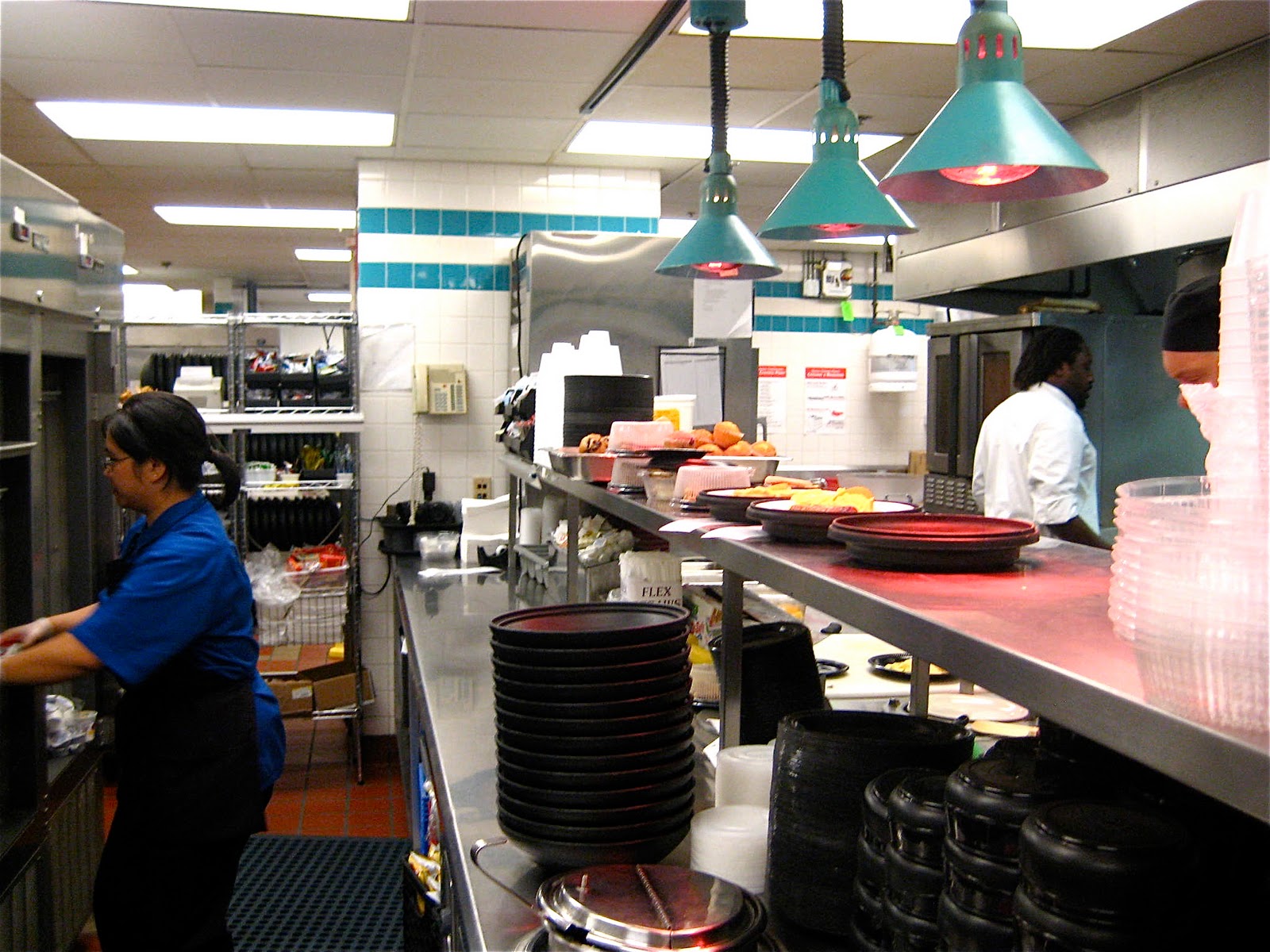
I have a clipboard in my right hand, a thermometer and temp log in my left hand, and I'm rockin' out in the oh-so-attractive hairnet.  A cart of dirty dishes clatters by me, while shouts and yells of "Next order UP!" bounce off the tiled walls and absorb into the slip-proof rubber floor mats.  Can you guess where I am?
The Tufts Medical Center kitchen!  For the dietetic internship I am required to learn production and management skills in a large food service setting.  So for the past three weeks I have been hanging out in the kitchen listening to stories [and songs!] from the cooks, exchanging meal trays and friendly banter with the kitchen staff, walking the hospital floors with the meal passers, and observing the inner workings of the kitchen management.  Tufts has contracted its hospitality service with Aramark, and like many hospitals it has set up a "room-service" infrastructure in order to give provide high quality individualized meals for their patients.
View of the trayline from behind.  I was usually stationed at the very end on the right, and would check the meals before they went to the hospital floor.
I was really nervous about taking pictures in the kitchen.  I wouldn't survive as a stealth photographer.
What did I do in the hospital kitchen?
Under the supervision of the Assistant Director of Patient Services (who is also a Registered Dietitian), I have been learning about management roles in the context of large-scale food production.
  1. Help assemble and check meals on the trayline.
  2. Performance Improvement measurements in the kitchen (accuracy of meal trays, timing of room service delivery, temperature compliance of the food, protocol compliance of the meal passer employees).
  3. Brief research report on sustainability in foodservice.
  4. Observed the call center, where patients place their room service orders.
  5. Sanitation and safety audits in the kitchen.
  6. Test tray...testing for correct food temperatures once the meal reaches the patient's room.
  7. Paperwork for payroll.
  8. Observe the head chef in food purchasing and inventory.
  9. Attend various meeting with my manager.
  10. Inservice with the cooks.  The topic was the gluten-free diet.

Here is the half-page inservice handout I made for the chefs!
Tasty [and Sustainable] Links to Share
While researching the concept of sustainability within foodservice institutions, I came across several informative resources.  Just want to share!  Enjoy. 
Healthy Land, Healthy Food, and Healthy Eaters: Dietitians Cultivating Sustainable Food Systems By Angie Tagtow and Alison Harmon.  Published 2009.  Eight page handout explaining the dietitian's role in approaching food, nutrition and health from an ecological standpoint.  

The Food Climate Relationship: The Registered Dietitians' Balanced Approach to Postivie Change Published 2010.  Handout published by Health Care Without Harm and Hunger and Environmental Nutrition (dietetic practice group of the American Dietetic Association).

Buyer's Guide for Sustainable Seafood.  By the Monterey Bay Aquarium, as part of their SeafoodWatch program.  They characterize fish by "Best Choice," "Good Alternative" and "Avoid."  Also check out their archives of Sustainable Seafood Recipes for amazing dishes like "Grilled Oysters with Wasabi and Miso."  Ouch...that sounds good.
Gotta love those homemade choc chip cookies.
The kitchen feeds me well!  I have hardly gone grocery shopping in 3 weeks.
Next week I start clinical rotations with the dietitians on the adult inpatient floors!  Cardiology is first up.  It's time for real patient contact, and I am so nervous.  Any tips for me??
Bye bye!
Rachel

PS- My last day in the kitchen is Friday.  I won't miss the hairnets, but I will sincerely miss the kitchen family.  Thank you for welcoming me into your loud and crazy, but friendly world!  

Beach Day+ Dietetic Internship Shout-Out!

Manchester, MA
Last week was spring break, and all I wanted was the sight, smell, and sound of the ocean.  I got my wish.  The clouds parted on Thursday and set the scene for a blustery yet lovely day on the New England coast.  50 minutes on the Commuter Rail brought my friend and I to Singing Beach, Manchester in northern Massachusetts.  What a refreshment from the brick and cobblestone of Boston city.
Singing Beach...tra la la!

Holla for the Dietetic Internship...Good Luck!
I was recently reminded that Monday April 5th is the nationwide Dietetic Internship Match Day- one week away!  In honor of all the applicants (and many of my dear friends), I dedicate this post to everyone who applied for a dietetic internship this spring!  GOOD LUCK!  *Scrambles on top of a chair and claps hands.  Bravo!*  I'm rooting for you.

While I'm at it, I might as well spread a little dietetics love and awareness.....
What Are The Steps to Becoming a Registered Dietitian?
  1. Bachelor's degree, and completion of certain classes as approved by the Commission on Accredidation for Dietetics Education
  2. Complete the Dietetic Internship, a supervised practice program.
  3. Take the national registration examination to earn the professional RD credential, "Registered Dietitian."
What's a Dietetic Internship (DI)?
A DI is a postbaccalaureate program that provides a minimum of 900 hours (soon to be increased to 1200 hours) of practical experience in dietetics.  This encompasses a wide variety of skills from outpatient diet counseling, to tube feed calculations, to managerial roles in food service kitchen.  There are  about 250 programs nation-wide typically running from six to twelve months, although combined graduate degree-linked programs go longer.  I am doing a combined dietetic internship and graduate degree through Tufts Medical Center, Frances Stern Nutrition Center.

What's DI Match Day?
This year Match Day falls on April 5th.  It is the momentous midnight hour when dietetic students across the country find out their placement to dietetic internship programs through a national computer matching system.   
Ice cream at Singing Beach.

Here's a shout-out to some blogs I enjoy by other dietetic interns:
The Health Nut by Emily at St. Louis University.
Foodie Nutritionist Emily at UConn/Hartford Hospital.  
Healthy Blog Snack Lindsey, fellow Tufts Dietetetic Intern!
Green Grapes Blog Corinne, another Tufts intern!
Off the Wall Food blog by Tufts dietetic intern Renee, and her roommates Kelly and Stephanie!
Around the Plate by Kati from Central Michigan University
J and J Take Charleston: One Veggie At a Time Julie and Johanna, Medical University of South Carolina
Peace, Love, and Food Kara Lydon, Mount Auburn Hospital, Massachusetts
All Access Internships Blog  This blog is but one resource from All Access Internships, a great online community for dietetic students and interns!

Do you know of other dietetic intern bloggers or blogs?  I know I'm missing many more, so pass them along!
And just out of curiousity...
I'll take sand over trees any day.  But given a holiday, would you go to the beach or the mountains?
Bye!
Rachel

Signposts. Lessons Along the Trail

This was the first week of spring semester classes.  The workload has yet to dig in and leave marks on my shoulders, so for the present I feel foolishly enthusiastic to run, skip, and leap ahead into every class, assignment, and reading.  But hold on-let me turn around and peer back to the beginning, way back to the trailhead.  Where have I trekked, and what have I learned?  I'm glad this blog can help me remember the signposts along my trail.
 December 2009, Davis CA.  
Exploring a new [muddy] trail one fine afternoon.
Get ready for some more random pictures..
Signposts along the Dietetic Internship
What's a dietetic internship?  Short answer: Learning the skills to become a Registered Dietitian through 1200+ supervised hours of clinical nutrition training.  Long answer: please see the American Dietetic Association.
Here's the rotations I've done so far.

  1. Tufts Weight and Wellness Center-a multidisciplinary approach to weight loss and bariatric surgery.  What did I do?  I donned scrubs and observed a gastric bypass surgery.  I [unsuccessfully] attempted a meal-replacement diet by eating high protein bars from 3 days.  I watched a lot of nutrition counseling.  But most importantly, I learned respect from the clients that I met.  Behavior change is HARD!  Also, the dietitians here introduced me to greek yogurt.  A lovely substance.
  2. Tufts Research rotation.  These dietitians and researchers are investigating the relationship between HIV and nutrition.  I did my first diet recall here!  (I had one convicting assignment involving omega-3 fatty acids. I went home and bought walnuts, and I am still on the search for cashew butter.)
  3. Outpatient Head and Neck Oncology.  Chemotherapy and radiation makes for some unhappy patients.  This was my first chance to read medical charts-so many abbreviations!
  4. Dental rotation at Tufts Dental School- I learned about preventative oral nutrition.  You know-don't eat hard candy, avoid soda, brush those pearly whites, and floss.  Yay for a free toothbrush! 
  5. Administration Rotation- mock staffing schedule and quality control exercise...tedious but very relevant.
  6. Management Rotation- mock budget exercise, and a lesson on the politics of hospital bureaucracy...scary.
  7. WIC Office.  I never thought I would like community nutrition.  But here I was truly touched.
  8. Joslin Diabetes Center.  Ahh, 3 weeks of diabetes overload at Joslin-what a priviledge!  I counted my carbs and tracked my sugars (yay for a free glucometer!), I observed insulin pump and continuous glucose monitoring training (wow, high tech stuff), I learned about Vitamin D and UV exposure, and I met a very cool pediatric dietitian.  Now here's someone who rocks her job! 
  9. PRIORITY- a new pediatric weight clinic at Tufts Floating Hospital for Children.  I gathered materials for a nutrition education handout on healthy restaurant eating tips.   Pretty *shocked* by the Cheesecake Factory and Uno's menus.  5000+ mg of salt and 30+ grams saturated fat in ONE dish?!  

    Farmers market at Point Reyes, CA.  I want some of this!  
    Signposts from the classroom.
    I've learned so much from my classes, but here's two things I'd like to share.
    First.  I'm thankful that my classmates are my future colleages.  In my biochem class I enjoyed hearing the opinions of my peers as we tore apart the new cookie diet, debated the soda tax, or questioned the front of package food labels.  I'm constantly humbled by their accomplishments and ideas.  What an optimistic future.
    Secondly.  I've been thinking about the field of nutrition, and I have a lot of questions.  Online nutrition information is like an unchartered frontier.  How can I sort through the inaccurate junk and dig up the nutrition truth?  Nutrition is a multi-disciplinary field crossing into government policy, food industry, marketing, and scientific research.  Thus, is there such a thing as a nutrition expert?  Nutrition is a hot topic, and everyone wants to get their hands dirty: the food industry, sports and fitness professionals, physicians, researchers,...and every person who eats is their own nutrition expert, right?   As a future dietitian, where is my place?
    Summer 2009 Farmers Market.  
    It snowed yesterday, and I'm longing for some color!
    For the next 4 months I'm out of clinical rotations.  This means my posts will be related to the masters classes, and not so much the dietetic internship.
    Here's my Sping semester lineup:
    Public Policy of Health Claims for Foods
    Regression Analysis for Nutrition Policy
    Advanced Medical Nutrition Therapy
    Communication Strategies in Health Promotion
    Design of Epidemiologic Studies for Nutrition Research
    Crumbs of Advice: for Dietetic Students [and myself!]
    Get friendly with Pubmed.  This search portal for scientific literature is the ultimate resource for nutrition research, or any research!  Reading, understanding, and translating research literature is an art and an essential skill.   I'm slowly getting better.
    Have you tried Google Reader?  Stay on top of real time nutrition news by subscribing to RSS feeds of the NYTimes, Wall Street Journal, other major newspapers, and government health agencies (USDA, NIH, non gov't IOM).
    Plunge into social media.  It's pulling out to sea, so get on board.  No I'm serious!  Blogs, twitter, linked in.  Yup-even if you don't like it, at least be aware of it.  I believe this skill set will be critical in our internet-fueled economy.
    Get aquainted with Microsoft Excel.  Quite frankly, I struggle with Excel and wished I had learned it sooner.
    Battery Park, NYC.  January 2010.  Hey little guys!  You cold up there?
    Thank you to those who read my blog, or for anyone who is stopping by for the first time.  I enjoy processing my thoughts, sending them out into the void, and sometimes hearing echoes and answers.
    I'm happily munching and crunching along this trail, and I'll try my best to keep spreading the crumbs of what I'm learning.
    Sincerely,
    Rachel

    A Cloudy Forecast for the Sunshine Vitamin

    I posted this one week ago, and received a comment questioning the 200 IU Vitamin D recommendation that I quoted.  Oops, I was a little careless.  So after some additional research, I'm revising this post.  Tonight my roommate (also a Tufts dietetic intern) and I just raided our fridge and compared our yogurt, milk and vitamin D supplement food labels!  Quite fun!
    Vitamin D-How Much is Enough?
    Short Answer: The Institute of Medicine (IOM) has set a Daily Value of 400 IUs per day.  The Adequate Intake is 200 IUs per day (this was set in 1997).   However many health professionals are recommending higher levels of 800-1000 IUs per day.  Stay tuned because the IOM is releasing new recommendations next year!

    Long Answer: There is controversy about both Vitamin D requirements and Vitamin D status.  I mentioned the Vitamin D requirements above, but what about Vitamin D status?
    A blood sample can test Vitamin D status by measuring levels of 25 hydroxy vitamin D, or 25(OH)D.  Vitamin D sufficiency is defined as blood levels greater than 30ng 25(OH)D per mL.  Vitamin D insufficiency is 21-29 ng 25(OH)D per mL.  Vitamin D deficiency is 20ng 25(OH)D per mL or less.
    Now comes the tricky part.  How do we measure Vitamin D produced in from sunlight?  Like most things Vitamin D-related, I don't know if there is a concrete answer for this.  Although Vitamin D is found in a limited number of food sources (salmon, mackerel, tuna, fortified milk, fortified cereal), our skin makes Vitamin D from sunlight.  Factors such as skin pigmentation, sunscreen, and weather make the situation very confusing.  The Institue of Medicine is taking this into consideration as they update their Vitamin D recommendations (scheduled for release in May 2010).
    flickr photo by _mandrew_
    Daily Sunshine Dose
    During rotation at the Joslin Diabetes Center on December 14th, I heard a research presentation on Vitamin D status in children with Type 1 Diabetes.  At Joslin a group of researchers is comparing levels of Vitamin D in children who have Type 1 Diabetes compared to children who do not.  Vitamin D receptors have been found on many cells, extending D's function in the body beyond calcium absorption and bone strength.  This explains much of the recent Vitamin D hype.  Joslin is analyzing Vitamin D's role in immunity, particularly in the auto-immune factors of Type 1 Diabetes.  Cool, right?  Their study is not completed, so I can't comment on the preliminary results.
    The UV Index
    Vitamin D comes from sunlight.  But not just any old sunlight.  In order to absorb Vitamin D through the skin, the sunlight must be above UV level 3.  The researcher at Joslin presented these nifty weather charts that show UV Index by month.  Any month with UV less than 3 means that Vitamin D cannot be absorbed through the skin.  Where I'm living, the forecast looks a little gloomy for sunny D.
    Boston, my New England home.  Low UV levels November through February.
    Sacramento, close to my hometown in California.  Low UV from November through January.
    Honolulu, dare I even compare?  I guess my grandpa doesn't have to worry.
    Japan, a country dear to my heart.  UV levels are similar to Boston.
    Check out your city at Climate Guides-Weather 2 Travel.
    In October I started taking a calcium + vitamin D pill.  The world of vitamin supplements is a slippery slope.  I know some dietitians who promote them, and others who won't touch them.  I believe it is best to get vitamins from the food that we eat.  However I decided to start some Vitamin D pills this winter since I don't drink milk, I hardly eat fish, and I live in New England.
    Where do you live?  What do you think?

    Track the Sugars and Count the Carbs

    Joslin Diabetes Center Part 2
    Dietetic Internship, Diabetes Rotation
    December 1-18, 2009
    flickr photo Holiday Sugar Cubes by libraryman

    I'm thinking of a classic line from Harper Lee's To Kill A Mockingbird,  "You never really understand a person until you consider things from his point of view... Until you climb inside of his skin and walk around in it."
    At Joslin many of the diabetes educators take this attitude.  They try to experience the everyday life of a person with diabetes by tracking their own blood sugars, wearing a temporary insulin pump (it has salt water, not real insulin!), or trying continuous glucose monitoring.  I must do likewise.  This means I must learn to eat as if I had diabetes.  My assignment this week: carbohydrate counting.
    What is diabetes?
    Diabetes is a disease where the body cannot properly use and store energy.  The primary form of energy is sugar, or glucose.  Food is broken down into glucose and sent to the blood stream.  The pancreas makes insulin, which is a hormone that transports the glucose from the blood into body cells.  In untreated diabetes, the glucose will constantly build up in the blood and cause serious complications.  Insulin shots, oral medication, diet, and exercise are needed to manage diabetes.  There is no cure.
    There are two types of diabetes:
    Type 1 Diabetes - The body cannot use glucose because the pancreas cannot make insulin.
    Type 2 Diabetes- The body cannot use glucose because the pancreas makes too little insulin, or the insulin cannot efficiently transport the glucose into body cells.
    What is carb counting?
    Carbohydrate counting is a method of controlling food intake by tracking sugars.  Carbohydrates are found in many foods, and once digested they immediately turn into glucose.  Using menu plans and daily carbohydrate goals are helpful for dosing insulin and controlling blood sugars.  A registered dietitian is the best professional to coach someone in carbohydrate counting.
    For the record, this is not a "diabetic diet."  There's no such thing.
    My Assignment:
    1. Pretend I have Type 1 Diabetes.  I am taking 20 units of Lantus insulin at bedtime.  (This slow-acting insulin is like a constant drip that steadies my blood sugar throughout the whole day).  I am also taking Novolog at each meal.  (This short-acting insulin quickly takes care of the food that I eat at mealtimes). 
    2. Eat about 165 grams of carbohydrate each day.  
    3. Only eat a max of 50 grams of fat each day.
    4. Eat small meals with frequent snacks.  This helps stabalize the blood sugar.   
    5. Try balance each meal with protein, carbohydrate, and fat.  This gives slow and steady digestion of food, and evens out the blood sugars.  
    My Carb Counting Results for Monday, Dec 14th
    I had to make a special shopping trip to Trader Joes this weekend, and I planned out my carbohydrate goals for each meal:
    Breakfast 30 grams carbohydrates
    Lunch 45 g
    Snack 15 g
    Dinner 60 g
    Snack 15 g

    Looks like I met my overall carbohydrate goal and my fat goal.  However, my diet quality was low, and my meals were not spaced out very well.  Balance could have been better, since I didn't have much protein.
    The Carb List
    Just for fun!  This is what I'm frequently munching on during the week.  Hmm, good to know.  My carb awareness has increased.

    Taken from food labels and Joslin's Food Choice List
    What did I learn?
    Lesson #1: 1-2-3, Re-learning the numbers.  As suspected, counting was hard work.  Besides the careful fat and carb tallies, carb counting was more than numbers.  It required mindful eating, skillful label reading, and careful menu planning skills.
    Lesson #2: Healthful eating is universal.  Counting carbs is useful for managing diabetes.  It's also useful for planning balanced meals.  With or without diabetes, it's a skill for eating healthfully.  
    Lesson #3: I love my pancreas.  Carb counting, tracking blood sugars, insulin shots, insulin pumps- these are all tools to imitate the action of the pancreas.  But even with the best technology, diabetes management is not perfect.  So I'm thankful for my pancreas; It really is an amazing organ.  Good job pancreas, keep it up!

    Carb counting is a tool, imperfect but useful.  As one of my preceptors said, "Diabetes management is 60% art and 40% science.  But shh...don't tell the doctors!  They think it's the other way around." : )
    Disclaimer. I am not a Registered Dietitian yet. I provide nutrition information intended for the general public, not for the treatment of a specific medical condition. I try to use scientific research and reliable sources when forming my opinions and messages.
    Related Posts with Thumbnails