Giveaway! Jumpstart Your Winter Exercise and More...

I have three ways to confirm winter's chilly arrival: my lips begin to chap, I no longer need to referigerate my fruit, and I start wearing a pair of gloves to bed.  Oh, and one more thing.  On these frigid New England mornings, I find it impossible to jubilantly spring out the door for an early jog.  Brrr.  I don't own a gym membership, but fortunately there are other ways to keep my blood pumping and muscles working from within the comforts of home.
No matter what temperature your thermostat registers, check out this giveaway to get your winter exercise groove on!
First Place: Women's Home Workout Bible
The first place prize for my giveaway will be this handy dandy workout book, Women's Home Workout Bible published in 2010.  Glossy pictures demonstrate step by step strength training and resistance training exercise moves utilizing body weight, exercise bands, exercise balls and free weights.  The book also offers tips for equipment purchase and plenty of weekly workout plans.
Second Place: 2011 Edition Calorie King. 
I received several copies of this new 2011 edition at FNCE (my first time attending!), so I want to share one book with the second place winner.   Calorie King-Calorie, Fat, and Carbohydrate Counter is a book that lists nutrient info for various foods, beverages, snacks, and even restaurants.  Small and compact, it easily fits into a purse or desk drawer, perfect for speedy page-flipping for quick reference.
To enter:
  1. Leave a comment on this post.   Please share what you do for exercise, or a physical activity that you enjoy!
  2. Tweet this post for second entries.  Can use this shortened link: http://bit.ly/9vHqP2 
Open to U.S. residents only.  Deadline to enter is Tuesday November 16th by 12noon EST.  I'll pick two winners through random.org and announce the lucky people next week.
This giveaway is now closed.
Cheers,
Rachel

The 15 Skills of a Competent Cook

Anthony Bourdain, in his most recent book Medium Raw, argues that preparing a home-cooked meal is a survival skill, a social responsibility, even a moral imperative for a citizen of today's society.  While I recommend his book with hesitation (his crassness often seems unnecessary), I heartily agree that people should reclaim the fundamental ability to prepare food for themself and for others.  Bourdain records the essential cooking skills; from the looks of his list, I have a lot of work to do before I can call myself a cook!
flickr photo from theqspeaks
15 Skills of a Competent Cook:
  1. Chop an onion.  Basic knife handling, sharpening and maintenance.  Master the basic chop, dice, mince and slice.
  2. Cook an omelet.  Egg cookery requires sensitivity to the food inside the pan.
  3. Roast a chicken, yes the whole chicken.
  4. Grill and rest a steak.
  5. Cook vegetables to a desired doneness.
  6. Whip up a standard vinaigrette.
  7. Shop for fresh produce; have a sense for what is in season; be able to tell if something is ripe or rotton.
  8. Clean and filet a fish.
  9. Steam crab, lobster, a pot of mussels, or a pot of clams.
  10. Roast meat in the oven.
  11. Roast and mash potatoes.
  12. Make rice; both steamed and rice pilaf.
  13. Make stock from bones.  
  14. Master the fundamentals of braising...time to try that beef bourguignon.
  15. Develop a modest repertoire of a few dishes, tasty morsels that I would be proud to serve to others.
flickr photo by bitchincamero
All this home cooked goodness reminds me of Alice Lichtenstein's article in the Journal of the American Medical Association titled Bring Back Home Economics Education, also featured on Marion Nestle's blog.  The revival of home economics in schools may promote health, wellness, and act as a positive influence to stave off obesity in American youth.

What do you think of Bourdain's list?  Are you 15 for 15?
Do you think the revival of Home Economics is an obesity solution?


Happy Cooking,
Rachel

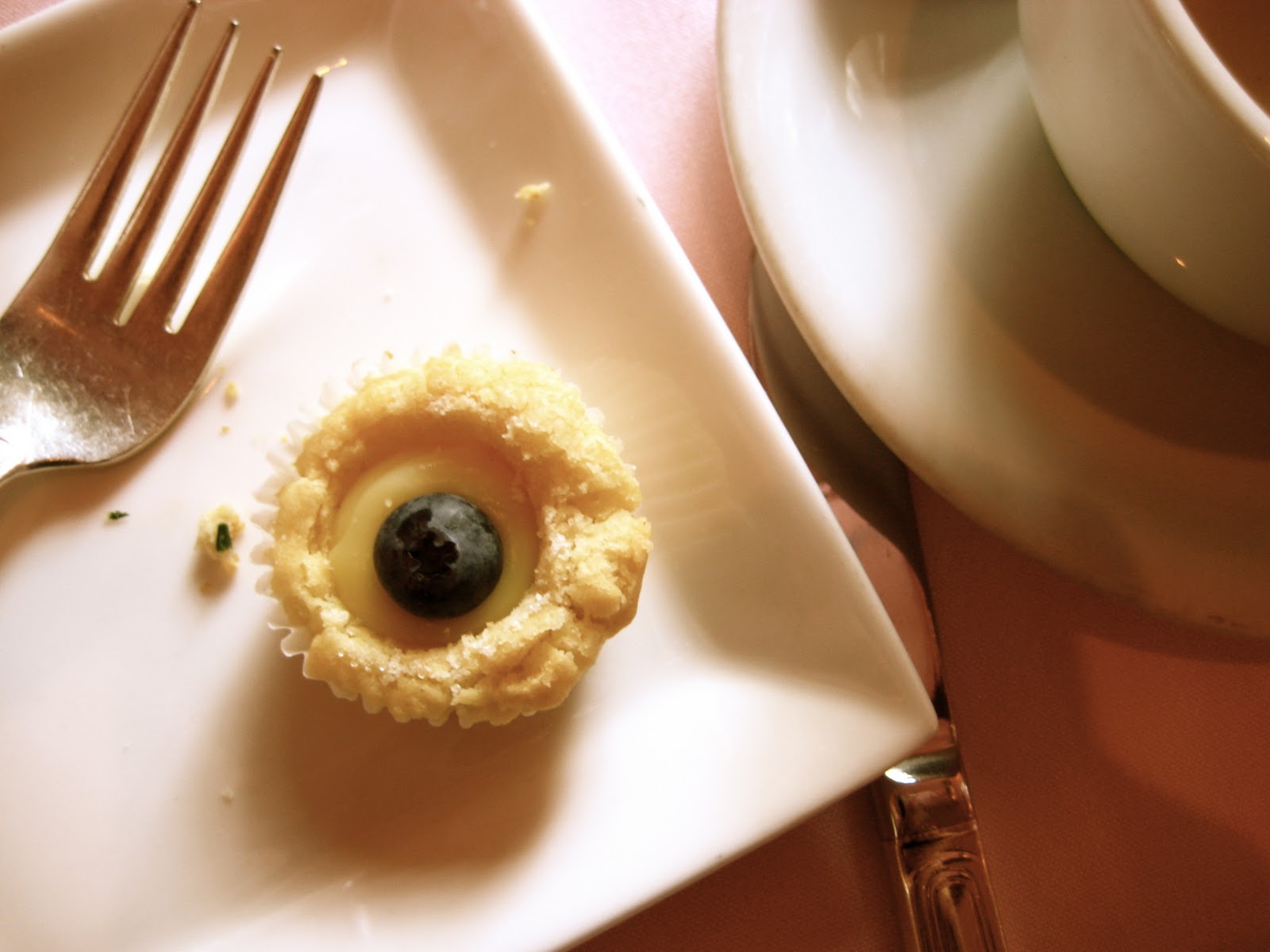
Birthday Tea Time

  Happy Birthday to my roommate!
Upstairs on the Square
Harvard Square, Cambridge
Massachusetts
Sip.
Crunch.
-Rachel

At Julia Child's House

A charming 10-minute walk from Harvard Square.  A sharp left on Irving Street.  Number 107, 105...aha, number 103.  An unassuming paneled house, tucked behind a simple white fence.  Is this really the former residence of Julia Child?  We almost missed it.
Last weekend a friend and I traversed to Julia Child's former "little house in Cambridge."  Perhaps we were expecting a brick mansion, so the straighforward abode took us by surprise.  But we stood there,  straining our ears for the remnant sounds of clattering pots and whistling kettles.  
Cheers to weekend adventures with friends.
Hello to Monday.
Rachel

Foil-Pack Mustard Cod over Swiss Chard

In nutrition clinic last week, one of the patients wailed, "I know I should eat fish, but I don't know how to cook it!"  The dietitian rummaged in her drawer, and promptly produced this recipe.  Meanwhile I was sitting in the corner with similar murmurs of fishy concern cycling through my head.  So after the appointment was over, I secretly photocopied the recipe to try at home this weekend.  Sure enough.. simple, fast, and delicious.
Foil-Pack Mustard Cod over Swiss Chard
modified from original recipe as featured in Diabetes Living
Original recipe uses haddock and spinach
(serves 4)
4 leaves of Swiss chard (or 4 cups of spinach), washed
1 pound cod or other white fish, cut into 4 pieces (1/4 - 1/2 inch thick)
1 Tablespoon Dijon mustard
2 Teaspoons olive oil
2 Tablespoons white wine vinegar
2 cloves garlic, minced
1 shallot, chopped
1/4 teaspoon black pepper
20 grape tomatoes, halved
  1. Preheat oven to 375. 
  2. Place 1 leaf swiss chard (or 1 cup spinach) in center of each 4 (18-inch-long) sheets of heavy duty foil.  Instead of heavy-duty foil, you can use a double layer of regular foil.
  3. Flace fish on top of greens.
  4. Combine mustard, olive oil, vinegar, and garlic.  Drizzle evenly over fish. 
  5. Sprinkle with shallots, black peppers, and tomatoes.
  6. Bring up foil sides to form a packet.  Double fold the top and ends to seal each packet, leaving room for heat circulation inside.  Place foil packets in single layer on baking sheet.  
  7. Bake 15 minutes, or until fish is opaque and flakes easily with a fork.  Cut slits in foil packets with sharp knife to release steam before opening.
Dinner time study session.
Nutrition Info for 1 serving.
Calories 150 kcal, Protein 23 g, Total Fat 4 g, Saturated Fat 1 g, Carbohydrate 7 g, Dietary Fiber 2 g, Sodium 200 mg.
Nutrition Tip: American Heart Association recommends eating fish twice a week for heart health.

I thought I would be floundering, but cooking fish wasn't so scary after all.
Do you cook fish often?  Did you eat something new this weekend?
Rachel

Top 10 Clinical Nutrition Resources

This summer I finished adult hospital rotations, yipee!  In addition to developing a graham cracker addiction (the food of choice stashed at every nurses' station), I also discovered a growing curiosity for the medical principles that accompany nutrition recommendations.  Here's some handy references that I want to share.
(A few dietetic interns.  Shout out for the summer crew!)
My 10 Favorite Resources for Hospital Rotations:
When I wasn't google-ing definitions and abbreviations, these books and websites were my go-to references.
  1. Nutrition and Diagnosis Related Care by Sylvia Escott Stump (2008).  Easy to use textbook with nutrition guidelines organized by medical diagnosis.  
  2. Dynamed.  Website that provides the medical information organized by disease state.  Includes causes, risk factors, symptoms, diagnosis, prognosis, treatment, and evidence-based recommendations with direct links to cited studies.  AWESOME! (By subscription only-hopefully most hospitals have this.)
  3. The ICU Book by Marino.  This book provides useful medical background for the intensive care units (issues like shock, acid-base balance, respiration and ventilation).  Great layer of medical understanding to top off a nutrition foundation.  
  4. Atlas of Human Anatomy by Frank H. Netter.  (Also known as "Netters" by the medical students.)  Standard anatomy textbook with great illustrations.  Makes up for that cadaver's class I never took in college, hehe.
  5. ADA Nutrition Care Manual.   Are you scrambling for a quick patient-education handout?  The Amercian Dietetic Association has standardized handouts and menus, ready to print.  (Subscription only.)
  6. Medcalc- Smartphone application with medical calculations (BMI, Harris-Benedict).  Life just got easier.
  7. The ASPEN Nutrition Support Core Curriculem.  Book by the American Society for Parenteral and Enteral Nutrition (ASPEN); authoritative reference for tube feed and TPN.
  8. Food Medication Interactions by Pronsky.  Easy to use flip book with medications and their nutrient interactions.  Pretty sure this is a standard reference.
  9. Pubmed.  Step into the world of research by searching this free digital archive of biomedical and life science journal articles, organized by the U.S. National Institute of Health and run by the National Library of Medicine.  (Supposedly there's a "Pubmed Health" encyclopedia, but I can never find the link!)  
  10. Krause's Food and Nutrition Therapy (2007) and Nutrition Therapy and Pathophysiology (2010) by Nelms.  Here's one college textbook I don't regret buying!  Nothing beats these fundamental Medical Nutrition Therapy books.   
*TIP: If affiliated with a teaching hospital, try treasure hunting in the medical school library!
It will be fun to look back on these references in a year...
What do you think?
What are your favorite nutrition and medical resources?   
Got to keep this list going!
Cheers,
Rachel

So Long Summer

Sunnny summer reading in Harvard Yard.  
I didn't realize how long it has been since I last blogged; I notice that my furlough has been marked by a change of seasons.  It's time to say goodbye to frothy smoothies, chilly treats, and frozen yogurt (fortunately I had a farewell dose of Pinkberry on a recent California visit).
But I accept the simple facts: Pumpkins have replaced watermelons, and a fresh army of squeaky leather boots have been stationed in every department store window.   Here in Boston we've entered into the brief months between air conditioning and constant heating, where the electicity bill is delightfully low.  Why hello Autumn, I see you've arrived.
I'm going to keep these summer salads, which have become a lunchtime fetish.  But I also expect my pantry to provide a warm welcome to the newcomers, those sturdy but stubburn squashes, the winsome sweet potatoes, and trustworthy apples (I'll be crunching on these until April!).  Of course I'm eager for a Japanese pumpkin reunion as well!
Thankfully my seasonal concoctions can be executed with style.  
I have a new apron, made with love from someone special.
This fall I'm determined to bake bread; the crustier the better.
What are your fall cooking resolutions?  
What hearty foods are you hankering for?
Goodbye summer,
Rachel
Disclaimer. I am not a Registered Dietitian yet. I provide nutrition information intended for the general public, not for the treatment of a specific medical condition. I try to use scientific research and reliable sources when forming my opinions and messages.
Related Posts with Thumbnails